Resources for inspiration
🧠 What you’ll learn
- Great tools and resources to help you get prepared before you start designing
Sometimes there is nothing more delightful than just jumping into the design phase and to start creating, letting inspiration come as you create.
But if you are planning to make a pattern or whole collection to be sold (be it on your own products or sold as assets to others), it’s smart to do your homework first. Not the boring kind of homework, but the deeply inspiring and energizing kind!
In this chapter, I’ll share some of the resources I and others like to use in the creative research phase.
This covers:
- Collecting & moodboarding
- Trend discovery
- Pattern inspiration
- Source materials
I do not recommend starting with these tools all at once, you’ll surely get overwhelmed! Simply pick one or two that interest you or can solve a specific challenge you’re facing right now. In a while, come back and pick up another tool. Over time, you’ll build a strong arsenal of tools that you can draw on.
☝️ There are no affiliate links here, or anywhere else in this masterclass! I’ve picked these resources simply because I like them and think they are valuable.
Collecting & moodboarding
When to use: Gathering, organizing, and combining visual inspiration into clear directions for projects.
The best known platform for visual discovery. Create boards to collect patterns, textures, color palettes, and reference images. Also useful for spotting emerging aesthetics.
Milanote
While Pinterest helps you find and group imagery, Milanote lets you create actual moodboards with not just images, but texts, documents, notes, and more.
Trend discovery
When to use: Understanding what's gaining cultural momentum to inform timely, relevant design decisions.
Pinterest Predicts
Yearly trend report that’s based on billions of searches. Surprisingly accurate and completely free! It helps you see what's rising before it hits mainstream.
Check out the 2026 report.
Google Trends
Compare search interest for styles, colors, or themes over time and across regions. Useful for validating hunches about what's gaining traction.
Pattern inspiration
When to use: Studying historical patterns for timeless techniques, and contemporary work for current styles.
V&A Pattern collection
The Victoria & Albert Museum has an utterly amazing online collection, and it includes a large amount of patterns from throughout the age.
Be careful! Their license does not allow you to use these images without permission, though you can use them in your moodboards as reference images. If you are looking for images or patterns to use as source material in Repper, check the next section.
Print & Pattern Blog
A long-running blog showcasing contemporary surface design from around the world. It’s excellent for seeing what professional designers are creating. There haven’t been new posts for some months, but it’s such a deep and rich archive, I did not wan to leave it out.
Source materials
When to use: You want to remix and collage your way to new designs, rather than starting from scratch.
👁️ Looking ahead: Going deeper on finding good source materials
Source materials are key to good patterns, especially when working with Repper. In an upcoming module we’ll go deep on ways to gather source materials or make your own. These resources are a great place to start your journey, especially if you don’t have (much) own material yet to work with.
Rawpixel: public domain collection
Rawpixel has great source material in general, but you always need to be aware of the applicable licenses, which can be complex, confusing, and cost you money. With the public domain section, you don’t have to worry about that.
Public domain means the copyright on the images has expired, so you are fee to use them as you see fit. Rawpixel has gone through the effort of validating these, so whatever you see on this page you can use in your designs.
This is my no.1 source of materials for pattern designs! It has some of the most beautiful illustrations and paintings in the world.
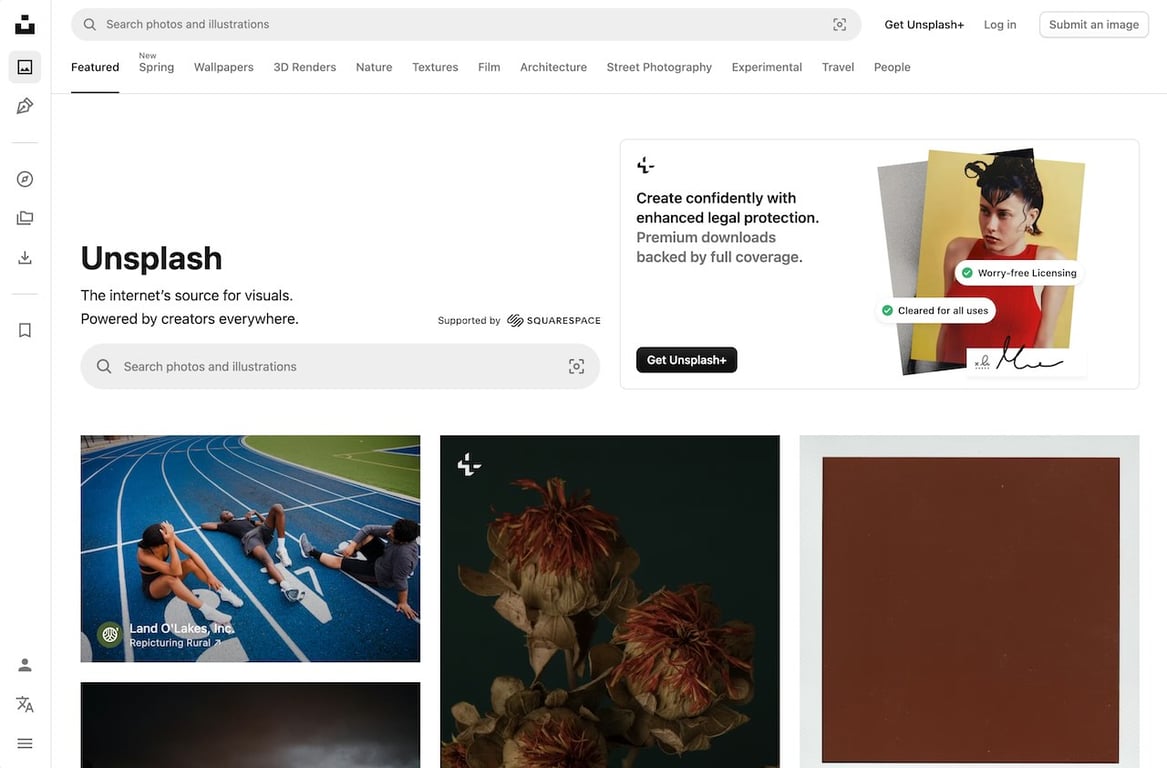
Unsplash
Using photography as source material gives a whole different look to patterns. It’s not as “easy” as using drawn materials, but can be very rewarding and give unique results.
Unsplash has a large collection of free images you can use freely for educational and commercial purposes.
💡 Tip: Search Unsplash library in Repper
We’ve built Unsplash search right into the app, so you can search and add images without the whole round trip of downloading and uploading images you find. It’s super fast! We describe how it works in this help article.
👁️ Looking ahead: Using photography as source material
In our module about creating your own source materials, we’ll talk more about using your own photos to create patterns. It’s much easier than it sounds! If you’re already curious, have a sneak peek the video 👉

In the next chapter, we’ll look at useful resources and tools while you’re designing. Let’s jump in.